043 Spice Rack Boot Camp
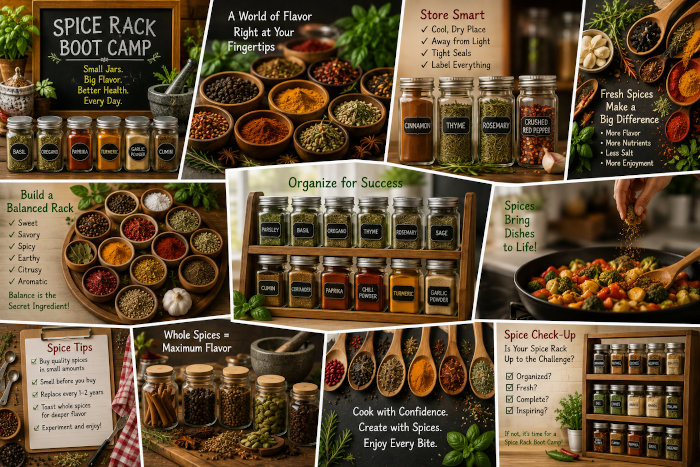
The Owner's Manual for the Human Body – Boot Camp Series
Small Ingredients. Big Health Potential.
For thousands of years, herbs and spices have been valued not only for their incredible flavors, but also for their potential to support health. Long before modern medicine, people around the world turned to plants growing in their gardens and forests for cooking, healing, and preserving food.
Today, science is helping explain why many traditional herbs and spices earned those reputations. Many contain antioxidants, polyphenols, essential oils, and naturally occurring compounds that may help support healthy aging, digestion, metabolism, circulation, and the body's normal response to inflammation.
One of the easiest upgrades you can make to your diet does not require expensive supplements—it may simply begin by opening your spice cabinet.
Why Herbs and Spices Matter
A teaspoon may seem tiny, but that teaspoon can contain an impressive variety of natural plant compounds.
Instead of relying only on extra sugar, salt, butter, or heavy sauces, herbs and spices allow us to add:
- Flavor
- Aroma
- Color
- Variety
- Beneficial plant compounds
The more colorful and varied our cooking becomes, the more diverse the plant compounds we may receive from our food.
Herbs and spices can also make vegetables, beans, whole grains, fish, poultry, and other whole foods more enjoyable. That may be one of their greatest health benefits: they can help make nutritious food taste exciting.
Building a Healthy Spice Rack
Think of your spice rack like a toolbox. Every herb and spice has its own flavor, personality, and possible purpose.
Turmeric
Turmeric contains curcumin, one of its most widely studied natural compounds.
Research has explored turmeric and curcumin for their possible roles in supporting:
- A healthy inflammatory response
- Joint comfort
- Brain health
- Antioxidant protection
- Healthy aging
Kitchen tip: Turmeric pairs well with black pepper and healthy fats such as olive oil. Black pepper contains piperine, which may improve the absorption of curcumin.
Try turmeric in soups, rice, roasted vegetables, eggs, curries, lentils, or homemade seasoning blends.
Black Pepper
Black pepper is far more than a basic table seasoning. It contains piperine, a natural compound that has been studied for its possible effects on digestion and nutrient absorption.
Freshly ground black pepper can add depth to nearly any savory meal, including vegetables, meats, soups, eggs, salads, and homemade dressings.
Cinnamon
Cinnamon is one of the easiest spices to add to everyday meals. It contains antioxidant compounds, and research has explored its possible role in supporting healthy blood sugar regulation and insulin sensitivity.
Try cinnamon on:
- Oatmeal
- Plain yogurt
- Apples and pears
- Whole-grain toast
- Coffee or tea
- Roasted sweet potatoes
Cinnamon can provide the impression of sweetness without requiring as much added sugar.
Garlic
Garlic has been used as both food and traditional medicine for thousands of years. It contains sulfur-based compounds that have been studied for their possible roles in supporting heart health, circulation, immune function, and healthy cholesterol levels.
Fresh garlic is especially flavorful in soups, sauces, vegetables, beans, marinades, and roasted dishes.
Kitchen tip: After chopping or crushing fresh garlic, letting it rest briefly before cooking may allow some of its natural compounds to develop.
Ginger
Ginger is widely known for supporting digestion and helping with occasional nausea or motion sickness. Its natural compounds are also being studied for their antioxidant and inflammation-related effects.
Ginger works well in:
- Tea
- Stir-fries
- Soups
- Smoothies
- Salad dressings
- Roasted vegetables
Fresh ginger provides a bright, sharp flavor, while dried ginger is warmer and more concentrated.
Oregano
Oregano contains a rich assortment of aromatic plant compounds and antioxidants. Its bold flavor makes it especially useful in tomato dishes, soups, sauces, roasted vegetables, beans, chicken, and Mediterranean-style meals.
Dried oregano is often more concentrated than fresh oregano, so a small amount can provide plenty of flavor.
Rosemary
Rosemary contains aromatic compounds that have been studied for their antioxidant properties and possible relationship to brain health and memory.
It pairs especially well with:
- Roasted potatoes
- Carrots and root vegetables
- Chicken
- Fish
- Beans
- Whole-grain breads
Because rosemary has a strong flavor, begin with a small amount and add more as needed.
Thyme
Thyme has a warm, earthy flavor and a long history of traditional use. Its natural oils have been studied for antimicrobial and antioxidant activity.
Thyme works well in soups, stews, poultry, vegetables, beans, sauces, and homemade seasoning blends.
Sage
Sage has been valued for generations in both cooking and traditional wellness practices. Researchers continue to explore its natural compounds for possible effects involving memory, brain function, digestion, and antioxidant protection.
Sage is especially flavorful with poultry, squash, beans, soups, stuffing, and roasted vegetables.
Parsley
Parsley is often treated as a decoration, but it deserves a more important place in the kitchen. Fresh parsley provides vitamin K, vitamin C, carotenoids, and other beneficial plant compounds.
Add it to salads, soups, potatoes, vegetables, eggs, fish, sauces, and grain dishes. It can brighten the flavor of a meal without adding extra salt.
Dill
Dill provides a light, fresh flavor that works especially well with fish, potatoes, cucumbers, eggs, yogurt sauces, vegetables, and salads.
It is another useful herb for adding flavor while reducing dependence on salt-heavy sauces and dressings.
Basil
Basil is rich in aroma and contains a variety of antioxidant plant compounds. Fresh basil can transform simple ingredients into a flavorful meal.
It pairs beautifully with:
- Tomatoes
- Olive oil
- Vegetables
- Soups
- Beans
- Chicken
- Whole-grain pasta
Paprika
Paprika is made from dried peppers and can provide color, flavor, and carotenoid compounds. Depending on the variety, it may be sweet, mild, smoky, or hot.
Smoked paprika is especially useful for adding deep flavor to beans, potatoes, vegetables, eggs, chicken, soups, and homemade rubs without relying on heavy sauces.
Chili Peppers
Chili peppers contain capsaicin, the natural compound responsible for their heat. Capsaicin has been studied for its possible effects on metabolism, circulation, appetite, and healthy pain signaling.
A little can go a long way. Chili flakes, cayenne, and chili powder can add excitement to eggs, beans, soups, vegetables, sauces, and grain dishes.
Cumin
Cumin adds a warm, earthy flavor to beans, lentils, vegetables, chili, curries, and Mexican- or Middle Eastern-inspired meals.
It contains antioxidant plant compounds and can make simple whole foods taste richer and more satisfying.
Coriander
Coriander comes from the seeds of the cilantro plant. It has a warm, slightly citrus-like flavor and works well in curries, soups, beans, vegetables, and spice blends.
Ground coriander pairs especially well with cumin.
Nutmeg
Nutmeg provides a warm, slightly sweet flavor. Only a small amount is needed.
Try it in oatmeal, yogurt, squash, sweet potatoes, coffee, baked apples, and vegetable soups.
Nutmeg should be used in normal culinary amounts, as consuming very large quantities can be harmful.
Fresh Herbs Versus Dried Herbs
Both fresh and dried herbs can have a valuable place in the kitchen.
Fresh herbs often provide:
- Brighter flavor
- Fresh aroma
- Color and texture
- An easy finishing touch
Dried herbs offer:
- Convenience
- Affordability
- Longer storage life
- Year-round availability
- Concentrated flavor
As a general kitchen guideline, dried herbs are more concentrated than fresh herbs. You may need roughly three times as much fresh herb as dried, although this varies by ingredient and personal taste.
When Should Spices Be Added?
Timing can change the flavor of an herb or spice.
- Add dried herbs earlier so they have time to soften and release their flavor.
- Add delicate fresh herbs later to preserve their brightness and aroma.
- Toast whole spices briefly in a dry pan to intensify their flavor.
- Bloom ground spices in a small amount of oil before adding liquids.
Be careful not to burn spices. Gentle heat can release wonderful aromas, but excessive heat can quickly create bitterness.
The Color and Variety Challenge
Try adding at least three different herbs or spices to one meal.
Breakfast ideas:
- Cinnamon
- Ginger
- Nutmeg
Lunch ideas:
- Basil
- Oregano
- Black pepper
Dinner ideas:
- Garlic
- Rosemary
- Turmeric
The goal is not to use enormous amounts. It is to gradually increase the variety of plant ingredients that appear in your meals.
Making Vegetables More Exciting
Many people believe they do not like vegetables when they may simply not like vegetables prepared without enough flavor.
Consider trying combinations such as:
- Carrots with cinnamon and ginger
- Potatoes with rosemary, garlic, and black pepper
- Broccoli with garlic, chili flakes, and lemon
- Cauliflower with turmeric, cumin, and paprika
- Green beans with dill and black pepper
- Tomatoes with basil and oregano
- Squash with sage and nutmeg
Herbs and spices can turn a basic vegetable into something you genuinely look forward to eating.
Using Spices to Reduce Salt
Salt can be an important part of cooking, but many packaged and restaurant foods already contain large amounts of sodium.
Herbs, spices, citrus juice, vinegar, garlic, onions, and fresh peppers can provide stronger flavor without requiring as much salt.
Instead of removing salt all at once, gradually reduce it while adding more:
- Black pepper
- Garlic
- Paprika
- Oregano
- Rosemary
- Thyme
- Lemon or lime juice
- Vinegar
Over time, taste buds can adjust, and highly salted foods may begin to taste excessively salty.
Do Not Forget Spice Blends
Homemade spice blends can be healthier and more flexible than many packaged versions, which may contain large amounts of salt, sugar, preservatives, or anti-caking ingredients.
Useful homemade blends include:
- Italian seasoning
- Taco seasoning
- Curry blends
- Mediterranean seasoning
- Chili seasoning
- Salt-free vegetable seasoning
- Homemade barbecue rubs
Making your own blend allows you to adjust the heat, salt, sweetness, and individual spices to match your taste.
Simple Italian-Style Blend
- Oregano
- Basil
- Thyme
- Rosemary
- Garlic powder
Simple Taco-Style Blend
- Chili powder
- Cumin
- Paprika
- Garlic powder
- Onion powder
- Oregano
- Black pepper
Simple Warming Blend
- Cinnamon
- Ginger
- Nutmeg
- A small amount of cloves
This blend works well in oatmeal, yogurt, apples, pears, squash, and sweet potatoes.
Whole Spices or Ground Spices?
Whole spices generally retain their flavor longer because less surface area is exposed to air.
Examples include:
- Whole peppercorns
- Cumin seeds
- Coriander seeds
- Cinnamon sticks
- Whole cloves
Grinding spices shortly before use can provide a stronger aroma and fresher flavor. However, pre-ground spices are still convenient and useful, especially when they make healthy home cooking easier.
How to Store Herbs and Spices
Heat, moisture, air, and light gradually weaken herbs and spices.
For better flavor:
- Store them in tightly sealed containers.
- Keep them away from the stove, oven, and direct sunlight.
- Avoid shaking containers directly over steaming pots.
- Label containers with purchase or opening dates.
- Replace spices when their aroma and flavor become noticeably weak.
Dried herbs and spices do not usually spoil in the same way fresh food does, but they gradually lose their strength and character.
Food First, Not Mega-Doses
Using herbs and spices in normal culinary amounts is different from taking concentrated extracts or high-dose supplements.
More is not always better. Concentrated products may interact with medications, affect blood clotting, influence blood sugar, irritate the digestive system, or create other unwanted effects.
People who take prescription medications, are preparing for surgery, are pregnant, or have significant medical conditions should discuss concentrated herbal products with a qualified healthcare professional.
The safest starting point for most people is simple: use a wider variety of herbs and spices as part of normal meals.
One More Thought...
Think of your spice rack as a miniature garden.
Each jar represents a different plant with its own history, culture, flavor, and collection of natural compounds. Alone, each contributes something special. Together, they can transform ordinary meals into colorful, flavorful experiences that encourage us to eat more vegetables, whole foods, beans, grains, and home-cooked meals.
Sometimes the healthiest improvements do not come from adding something expensive. They come from rediscovering the ingredients that have been sitting quietly on the shelf all along.
Spice Rack Boot Camp Challenge
This week:
- Choose one herb or spice you have never tried before.
- Add herbs or spices to every home-cooked meal.
- Replace some salt with herbs, spices, citrus, or vinegar.
- Experiment with at least one fresh herb.
- Create one homemade seasoning blend.
- Season and roast a tray of colorful vegetables.
- Smell and taste your older spices to see whether they need replacing.
Tiny jars. Big flavors. An incredible variety of plants—and perhaps one of the easiest ways to make healthy eating something you genuinely enjoy.
This article is for general educational purposes and is not a substitute for personalized medical advice. Herbs, spices, extracts, and supplements may affect individuals differently and may interact with medications or medical conditions.

Exploring Health, Longevity, and Better Living
Zehr.ws