048 Essential Oils Boot Camp: What Can Plant Aromas Really Do?
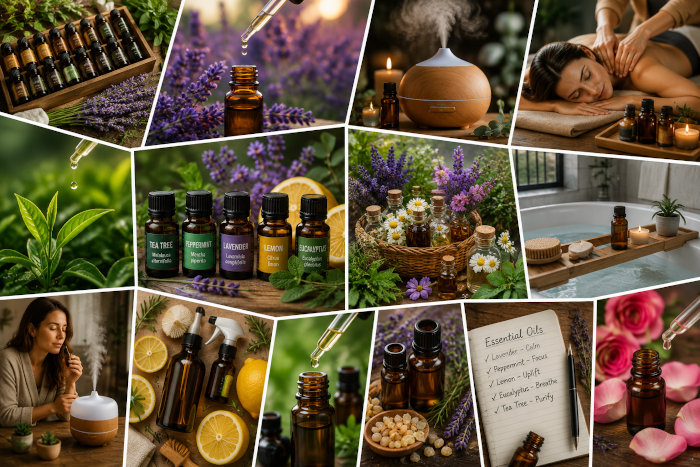
From rosemary and peppermint to lavender, eucalyptus, and even attracting honey-bee swarms — essential oils are an interesting intersection of plants, chemistry, smell, behavior, and health.
Open a tiny bottle of essential oil and you immediately know something chemically interesting is happening. The aroma can travel across a room, trigger a memory, make us feel more awake or relaxed, create a cooling sensation in the nose, or simply make an environment more enjoyable.
But what are essential oils actually doing?
Are they medicines? Pleasant fragrances? Plant defense chemicals? Insect signals? Pest deterrents?
The answer may be a little of all of the above — depending on the oil and how it is being used.
What Is an Essential Oil?
An essential oil is a concentrated mixture of volatile compounds produced by a plant. "Volatile" simply means that the molecules evaporate readily into the air.
That is why opening a bottle of peppermint oil can fill a room with fragrance without heating it.
Essential oils may be obtained from:
- Leaves
- Flowers
- Bark
- Peels
- Roots
- Seeds
- Wood
- Resins
They are not really "oils" in the nutritional sense of olive oil or vegetable oil. Instead, they contain collections of molecules such as terpenes, alcohols, aldehydes, esters, ketones, and phenolic compounds.
Different plants manufacture different combinations, which helps explain why rosemary, peppermint, lavender, lemon, cedarwood, and eucalyptus can smell — and potentially behave — very differently.
Why Would a Plant Make These Chemicals?
Plants did not evolve essential oils so humans could put them in diffusers.
These chemicals can serve important biological purposes for the plant itself. Depending upon the species and compound, plant volatiles may help:
- Discourage insects and animals from eating the plant
- Attract pollinators
- Communicate chemically with other organisms
- Reduce competition from microorganisms
- Protect damaged plant tissue
- Respond to environmental stress
That makes essential oils particularly fascinating. We are borrowing chemical compounds that plants have been manufacturing and refining through evolution for millions of years.
Why Does Smell Affect Us So Quickly?
Smell has unusually direct connections with areas of the brain involved with emotion, memory, alertness, and behavior.
When volatile molecules enter the nose, they bind to olfactory receptors. Signals from those receptors travel into the brain, where they can influence our perception and emotional response very quickly.
This helps explain something almost everyone has experienced: a smell can suddenly remind you of a person, place, meal, workshop, barn, forest, or childhood experience before you have consciously figured out why.
That relationship between scent and the nervous system is one reason aromatherapy deserves legitimate scientific investigation.
Rosemary: An Oil for Alertness?
Rosemary is especially interesting.
Human experiments involving rosemary aroma have reported changes in mood, alertness, cognitive performance, and measurements of nervous-system activity.
In one controlled experiment, rosemary inhalation was associated with increases in heart rate, blood pressure, and breathing rate along with participants reporting that they felt more active and refreshed.
Other research comparing rosemary and lavender aromas has found differences in cognitive performance and mood.
This does not mean rosemary is a treatment for lung disease or that breathing rosemary improves pulmonary function.
But it does suggest something more interesting than simply saying, "It smells nice."
The volatile chemistry of rosemary appears capable of interacting with our sensory and nervous systems.
Rosemary Inside a Dust Mask?
This raises an interesting practical question.
What if someone enjoys a tiny amount of rosemary aroma while wearing a protective mask around dust?
A pleasant fragrance may make wearing respiratory protection more enjoyable. And if something makes us more willing to consistently wear proper protective equipment, that could indirectly be useful.
However, there is an important distinction:
Feeling as though breathing is fresher or more pleasant is not necessarily the same as improving lung function.
Essential oils are concentrated substances, and inhaling too much can irritate the nose, throat, or airways. People with sensitive respiratory systems may respond particularly strongly.
A protective respirator should also never be altered in a way that interferes with its filter material, valves, fit, or seal.
Therefore, when experimenting with fragrance around respiratory protection, think very small exposure rather than turning the mask into an essential-oil diffuser.
If an aroma produces coughing, throat irritation, burning, chest tightness, wheezing, headache, dizziness, or uncomfortable breathing, stop using it.
Peppermint: Why Does It Feel Like We Can Breathe Better?
Peppermint provides one of the best examples of the difference between sensation and physiology.
One of peppermint oil's major components is menthol.
Menthol activates cold-sensitive receptors, creating the familiar cooling sensation in the mouth and nose.
That cooling sensation can make airflow feel easier even when the actual opening of the airway has not significantly changed.
That is remarkable by itself.
The brain doesn't merely measure airflow mechanically. It interprets sensory information coming from the nose and respiratory tract.
Too much peppermint or menthol, however, can irritate the respiratory tract. More is definitely not better.
Peppermint Versus the Hot-Tub Mice
Essential oils can also affect organisms other than humans.
Peppermint oil is widely used as a home remedy for discouraging mice and other rodents because of its powerful odor.
There are commercial rodent-repellent products containing peppermint oil, although peppermint should not be considered a guaranteed replacement for sealing entrances, removing food sources, trapping, or other proven rodent-control methods.
Still, if peppermint appears to discourage mice from visiting an area, that illustrates another potential role for plant chemistry: changing animal behavior.
And there is a humorous healthy-living angle here as well.
If keeping mice away makes sitting peacefully in the hot tub at night more enjoyable, perhaps peppermint just made a contribution to healthy living after all!
Eucalyptus: The Classic "Breathing" Aroma
Eucalyptus has been associated with respiratory products for generations.
One of its characteristic components is 1,8-cineole, also called eucalyptol.
The smell is immediately recognizable and can create a sensation of freshness in the nose and respiratory tract.
But concentrated eucalyptus oil can also irritate the skin, eyes, mouth, and respiratory tract, and swallowing eucalyptus essential oil can be dangerous.
This is another example where a tiny amount of an aromatic compound and a large dose of that same compound are very different things.
Lavender: Going the Other Direction
Rosemary and peppermint are often associated with alertness and freshness.
Lavender has received considerably more attention for relaxation, anxiety, and sleep.
Human studies of lavender aromatherapy have reported improvements in some measures of anxiety and sleep, although results vary between studies and aromatherapy should not be viewed as a replacement for medical treatment when one is needed.
From the perspective of healthy living, however, lavender raises an interesting possibility.
Perhaps essential oils don't have to "treat" anything to be useful.
If a particular aroma helps someone establish a relaxing evening routine, quiet their environment, or prepare mentally for sleep, that routine itself may have value.
Lemon and Citrus Oils
Citrus oils contain compounds such as limonene, which gives many citrus peels their characteristic aroma.
Citrus scents are frequently associated with freshness and alertness.
One interesting detail is that many essential oils come from plant structures we normally throw away.
If you squeeze an orange or lemon peel near a bright light, you can sometimes actually see a fine mist released from the peel.
Those tiny droplets contain the plant's aromatic oils.
Tea Tree Oil
Tea tree oil is another interesting member of the essential-oil world because laboratory research has demonstrated antimicrobial activity against various microorganisms.
But laboratory antimicrobial activity doesn't automatically mean that an essential oil should be used internally or substituted for antibiotics or medical treatment.
This distinction occurs frequently in health research:
A substance killing microorganisms in a laboratory dish is not the same thing as safely treating an infection inside the human body.
And Then There Are the Bees...
Here is where essential oils become really fascinating.
Honey bees communicate partly through chemical signals called pheromones.
Worker honey bees possess a structure called the Nasonov gland. Bees expose this gland near the end of the abdomen and fan their wings, distributing a chemical signal that helps other bees orient toward the colony, swarm, or other important location.
The Nasonov pheromone contains several volatile compounds, including substances related to citral and geraniol.
And that brings us to...
Lemongrass Oil and Catching a Honey-Bee Swarm
Lemongrass essential oil contains aromatic compounds that overlap chemically with parts of the honey bee's orientation pheromone.
For that reason, beekeepers have long experimented with very small amounts of lemongrass oil in empty hive boxes or swarm traps.
The idea is fascinating.
During swarming season, scout bees leave a swarm and investigate possible new homes. Eventually the swarm collectively chooses a location.
An appropriately prepared empty hive may be discovered by those scouts.
Adding a tiny amount of an attractive scent may increase the chances that scout bees investigate it.
Too much fragrance can be counterproductive, however. Honey bees possess an extraordinarily sensitive chemical communication system. The goal isn't to make the hive smell like a lemon factory!
A little can go a long way.
Could You Catch Your Own Bees?
If there is an established feral honey-bee colony living nearby, it becomes particularly interesting.
Healthy honey-bee colonies reproduce at the colony level through swarming.
The existing queen and thousands of workers leave the original colony while a new queen eventually takes over the established nest.
The departing swarm temporarily gathers while scout bees search for a suitable cavity.
If an empty hive or swarm box happens to be one of the attractive locations they discover, you may suddenly have bees!
There is something wonderfully circular about it:
A plant makes aromatic molecules. Humans extract those molecules. Honey bees use similar molecules as chemical signals. And a beekeeper can potentially use that chemistry to help a swarm discover a new home.
Essential Oils Are Concentrated
Perhaps the most important lesson in Essential Oils Boot Camp is this:
Natural does not automatically mean harmless.
A bottle of essential oil contains plant compounds at concentrations far greater than we would normally encounter by smelling the living plant.
Depending upon the particular oil, concentrated essential oils can:
- Irritate skin
- Cause allergic reactions
- Irritate eyes
- Irritate the respiratory tract
- Become toxic if swallowed
- Interact with medications
- Be dangerous to pets or children
- Cause photosensitivity when certain oils are placed on skin exposed to sunlight
Some oils that smell wonderful can be dangerous when swallowed.
Essential oils should therefore be treated less like harmless perfume and more like concentrated plant chemistry.
More Is Not Better
This may be one of the best general rules for essential oils.
If one drop smells pleasant, twenty drops aren't necessarily twenty times better.
Our odor receptors are remarkably sensitive.
A very small quantity can sometimes accomplish everything we are looking for without unnecessarily increasing exposure.
This is particularly important with inhalation.
A Small Essential-Oil Experiment
A collection of several essential oils provides an interesting opportunity for personal observation.
Instead of mixing many oils together immediately, try learning them individually.
Ask yourself:
- Do I find this aroma pleasant?
- Does it make me feel more awake?
- Does it seem relaxing?
- Does it make breathing feel different?
- Does it irritate my nose or throat?
- Does it trigger a memory?
- Do I enjoy it more while working or while relaxing?
- Does a very tiny amount work just as well as a larger amount?
That isn't a clinical experiment, but it is a useful exercise in learning how differently we can respond to sensory environments.
Some Interesting Oils to Explore
Rosemary: alertness, mood, cognition, and its refreshing herbal aroma.
Peppermint: cooling sensation, menthol, perceived airflow, alertness, and possible pest-deterrent uses.
Lavender: relaxation, sleep routines, and anxiety research.
Eucalyptus: respiratory sensation and the chemistry of eucalyptol.
Lemon or Orange: citrus chemistry, freshness, and limonene.
Tea Tree: interesting laboratory antimicrobial properties, with important safety limitations.
Cedarwood: wood-derived aromatics and traditional use around insects.
Lemongrass: refreshing aroma — and the particularly fascinating connection with honey-bee chemical communication.
Healthy Living Is Bigger Than Medicine
This may be the biggest takeaway.
When we talk about health, it is easy to think only about medicines, supplements, laboratory values, and diseases.
But our environment matters too.
A smell that makes a workshop more enjoyable...
A relaxing fragrance before sleep...
An aroma that makes wearing protective equipment more pleasant...
A scent that helps discourage pests from an outdoor relaxation area...
Or even a few aromatic molecules that help a wandering colony of honey bees discover a new home...
These may all have places in the much bigger picture we call healthy living.
Essential oils aren't magic.
They aren't imaginary either.
They are real plant chemicals interacting with an extraordinarily complex biological world.
And that makes them well worth understanding.
Zehr.ws Health Perspective: Zehr.ws explores health, nutrition, fitness, lifestyle, and emerging research for educational purposes. Essential oils are highly concentrated substances and can cause irritation, allergic reactions, poisoning, or other adverse effects when improperly used. They should not replace appropriate medical care or protective equipment. Use particular caution around children and animals, never ingest an essential oil merely because it is labeled "natural," and discontinue inhalation if it causes respiratory irritation.

Exploring Health, Longevity, and Better Living
Zehr.ws